ATV or side-by-side accident: who pays and what to do next
After an ATV or side-by-side crash, get medical care and keep the machine unrepaired. Who pays depends on the land, the driver, the maker and any rental shop. CPSC counts about 100,000 ER injuries a year. Arizona and Texas give two years to sue private parties, but government claims run far shorter.
Last checked November 9, 2026 · Official sources (26)
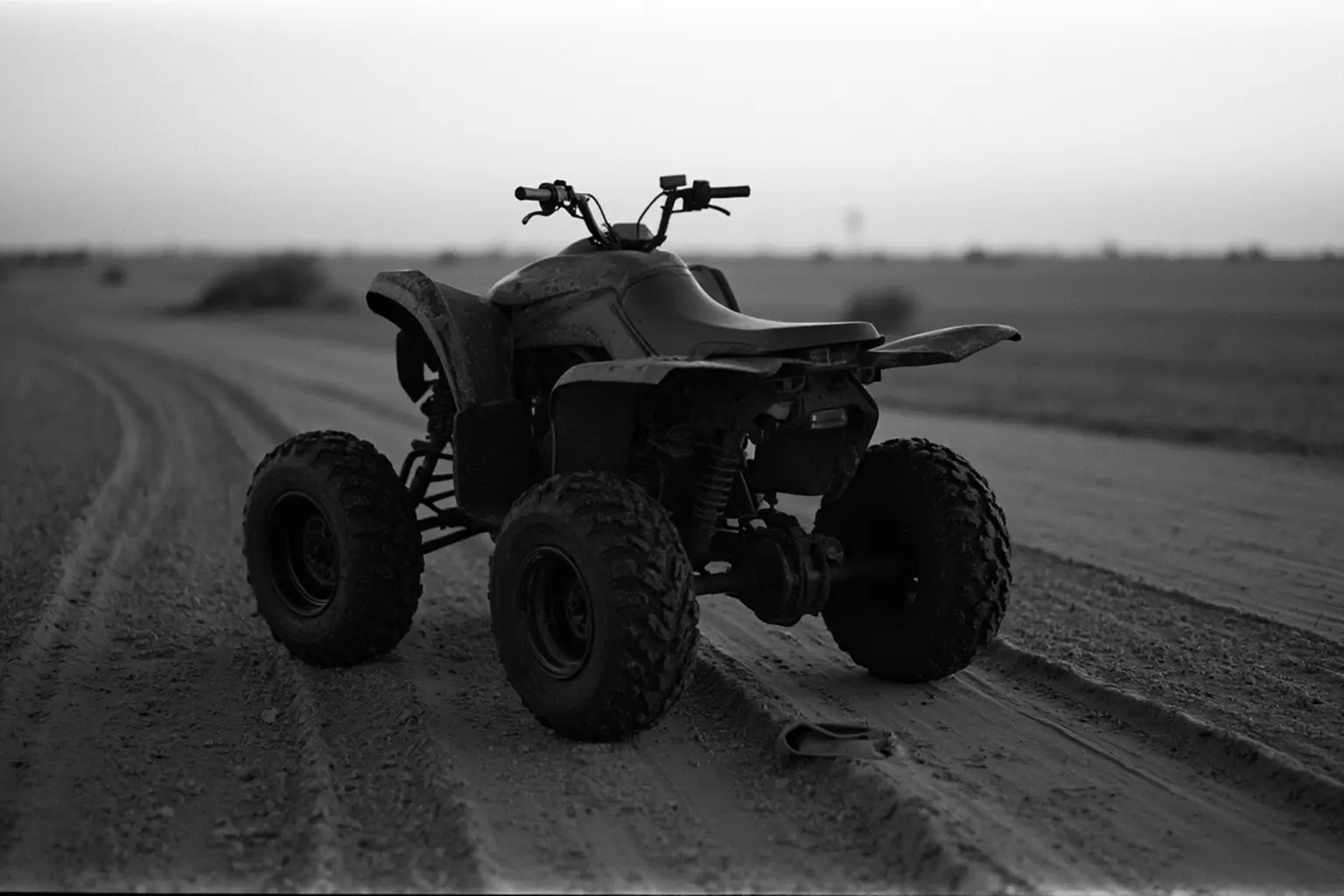
Why is an ATV or side-by-side accident different from a car crash?
CPSC estimates 509,900 people went to an emergency room from off-highway vehicles from 2019 through 2023. The agency says overturns and collisions are the most common deadly events. Side-by-sides, also called UTVs or ROVs, come with a roll cage, seat belts and other restraints, and rollovers are a special concern for them.
These cases are different on paper too. There may be no police report, no plates and no auto policy. The land may be public, private or rented. The machine may belong to a friend or a tour company. You may have signed a waiver on a tablet at the shop. Each of those facts changes who can be asked to pay.
What should I do right after an ATV accident?
- Get medical care, even if you can walk. Tell the doctor if your head, neck, chest or back hit anything.
- Call 911 if anyone is badly hurt. Ask a deputy, ranger or game warden to write a report, because no one may do it unless you ask.
- Take photos of the machine from all sides, the ground, the slope, any hole or wire, and the spot where it came to rest.
- Write down the make, model, year and serial number. Get the names of the driver, the owner, the rental shop and every witness.
- Keep the machine as it is. Do not fix the cage, belts, steering or brakes, and do not let the shop take it back.
- Save your helmet and gear, your rental paperwork and any text messages about the ride.
- Do not give a recorded statement to any insurer before you understand your injuries.
Who pays for an ATV accident?
There is rarely one obvious insurer. Many auto policies do not cover off-road machines, and homeowners coverage is often limited. Ask to see every policy before you assume there is none.
| What happened | Who may be responsible | Where money may come from |
|---|---|---|
| A friend drove and rolled it | The driver, and an owner who handed it to someone unsafe | An ATV policy, or possibly a homeowners policy |
| A rental or tour company | The company, for bad maintenance, poor training or unsafe routes | The company's liability insurance |
| The belt, cage, steering or throttle failed | The maker, dealer or parts company | The company's product liability coverage |
| Hidden wire, trench or washout | The landowner or manager, subject to the limits below | The landowner's insurance, if the law allows a claim |
| A car or truck hit you on or near a road | The other driver | That driver's auto policy, and your own uninsured coverage if it applies |
| A public road, trail or park caused it | A city, county, state or federal agency | A government claim with its own short deadline |
Could a defect have caused my side-by-side rollover?
Yes, and many people never ask. Machines can have problems with belts, cages, steering, throttles and fuel systems that no driver could have avoided. Check the CPSC recall list using the serial number.
In 2018, CPSC said one large maker agreed to a $27.25 million penalty after it failed to immediately report defects in certain RZR and Ranger models. That is about a reporting failure, not proof that your machine was bad. It shows why the machine itself needs a careful look.
What evidence disappears after an ATV crash?
| Proof | How it gets lost | What to do |
|---|---|---|
| The machine | Repaired, sold, or returned to the shop within days | Send a written demand to keep it unchanged |
| The crash site | Rain and other riders erase the ruts within days | Photograph it and mark the spot on a phone map |
| Rental records | Shops replace or lose paperwork | Ask for your contract, waiver and the service log |
| Your helmet and gear | Thrown away by family after the hospital | Bag them and do not clean them |
| Witness memory | Other riders go home and forget | Get names and numbers the same day |
Does a waiver or landowner law stop my ATV claim?
Not always. There are two separate barriers, and they work differently.
A waiver is a contract. In Arizona, the state supreme court held that the constitutional rule sending assumption of risk to a jury applies to written releases. That does not mean you will win.
It means a judge usually cannot end the case on the release alone. In Texas, courts can enforce a clear release of an adult's own claim, so the exact wording and how it was shown to you matter.
A recreational use law is different. It protects owners who open land for riding. Arizona limits liability to wilful, malicious or grossly negligent conduct for people riding without paying an admission fee.
Texas treats off-highway riding as recreation and says a covered owner does not owe more care than it owes a trespasser, with an exception for gross negligence or bad faith. The Texas law covers owners who do not charge, charge only a small amount, or carry set insurance. Paying to ride can change the answer, but it does not always.
My child was hurt on an ATV: what changes?
CPSC says riders under 16 should drive only youth models and never adult models. If an adult let a child drive an adult machine, that fact matters. A parent who signed a release is not always stuck with it.
A federal court predicted that a pre-injury release signed by a parent is not enforceable to release all liability for the child. The Texas Supreme Court has not decided the question, so treat this as unsettled. Ask about it anyway.
How do ATV accident rules differ in Arizona and Texas?
| Rule | Arizona | Texas |
|---|---|---|
| Deadline to sue a private party | 2 years | 2 years |
| Claim against a government | File within 180 days, sue within 1 year | Notice within 6 months, and some cities set a shorter charter deadline |
| If you are partly at fault | Your damages are reduced, not barred | No recovery if you are more than 50 percent at fault |
| Helmet rule | Under 18 on public or state land | On public off-highway land, beaches and highways |
| Rider training | Check the land manager's rules | Safety certificate needed on public off-highway land or a beach |
| Free riding on someone's land | Owner liable only for wilful, malicious or grossly negligent acts | Owner owes trespasser-level care, except gross negligence or bad faith |
Example only, not a prediction: if a jury found $100,000 in losses and put you at 30 percent fault, the award could drop to $70,000 in either state. At 51 percent fault, Arizona would still reduce the award, while Texas would bar it.
How much is an ATV accident settlement worth?
No official source gives an average, and no honest person can name a number before reading your records. A claim can include hospital bills, surgery, rehab, future care, lost pay, lost earning power, a destroyed machine, and pain and suffering.
The value depends on your injuries, how much insurance exists, who was at fault and whether a waiver holds up. A simple case with one insurer can take months. A product defect case often takes a year or more, because the machine has to be tested.
When should I talk to an ATV accident lawyer?
Early, if you were hospitalized, a child was hurt, someone died, or a rental shop or maker may be involved. A lawyer can send a letter telling the shop to keep the machine.
Ask whether they have handled off-road or product cases, who pays for testing, and whether the review is free. If any public land or road is involved, ask about the government deadline on your first call.
What mistakes hurt ATV injury claims?
- Letting the shop take the machine back after a rollover.
- Assuming a signed waiver ends everything.
- Assuming no insurance exists because it was not a car.
- Missing a 180-day or six-month government deadline.
- Telling an adjuster you were going too fast before you know what failed.
- Skipping follow-up care for a head injury.
Questions
Can I sue if I rented the ATV and signed a waiver?
Possibly. In Arizona the defense goes to a jury. In Texas the wording matters. Keep your paperwork and ask a lawyer to read it.
Does a landowner have to pay if I got hurt riding on their land?
Often not if you rode for free in Arizona or Texas, unless there was gross negligence or similar conduct.
How long do I have to sue after an ATV accident?
Two years for private parties in Arizona and Texas. Claims against a government have much shorter deadlines.
Is a side-by-side the same as an ATV under the law?
Not always. CPSC tracks them together as off-highway vehicles, but insurance and state rules can treat them differently. Check your policy and the land manager's rules.
Can a child ride an adult ATV?
CPSC says riders under 16 should use only youth models. State rules on helmets and training also apply.
ATV or side-by-side accident? See if you are owed money.
A free case review. $0 upfront. No fee unless you win.
See if I’m owed moneySources (26)
- CPSC, checked 2026-11-09. “an annual average of more than 800 deaths and an estimated 100,000 emergency department-treated injuries involving OHVs”
- A.R.S. 12-542, checked 2026-11-09. “there shall be commenced and prosecuted within two years after the cause of action accrues”
- Tex. Civ. Prac. & Rem. Code 16.003, checked 2026-11-09. “not later than two years after the day the cause of action accrues”
- A.R.S. 12-821.01, checked 2026-11-09. “within one hundred eighty days after the cause of action accrues”
- Tex. Civ. Prac. & Rem. Code 101.101, checked 2026-11-09. “not later than six months after the day that the incident giving rise to the claim occurred”
- A.R.S. 33-1551, checked 2026-11-09. “without the payment of an admission fee or any other consideration to travel across or to enter premises to hunt, fish, trap, camp, hike, ride, engage in off-highway vehicle, off-road recreational motor vehicle or all-terrain vehicle activity”
- Tex. Civ. Prac. & Rem. Code 75.003, checked 2026-11-09. “does not charge for entry to the premises”
- Phelps v. Firebird Raceway (Ariz. 2005), checked 2026-11-09. “applies to an express contractual assumption of risk. We hold that it does.”
- CPSC 2024 OHV report, checked 2026-11-09. “there were an estimated 509,900 emergency department-treated injuries”
- CPSC 2024 OHV report, checked 2026-11-09. “The most common fatality hazards associated with OHV-related deaths were overturns and collisions with another vehicle or a stationary object”
- CPSC 2024 OHV report, checked 2026-11-09. “ROVs are also equipped with rollover protective structures (ROPS), seatbelts, and other restraints”
- CPSC 2024 OHV report, checked 2026-11-09. “Rollovers are especially consequential for ROVs”
- CPSC, checked 2026-11-09. “failed to immediately report to CPSC that models of RZR and Ranger recreational off-road vehicles (ROVs) contained defects”
- A.R.S. 33-1551, checked 2026-11-09. “is not liable to a recreational user or educational user except on a showing that the owner, easement holder, lessee, tenant, manager or occupant was guilty of wilful, malicious or grossly negligent conduct”
- Tex. Civ. Prac. & Rem. Code 75.001, checked 2026-11-09. “pleasure driving, including off-road motorcycling and off-road automobile driving and the use of off-highway vehicles”
- Tex. Civ. Prac. & Rem. Code 75.002, checked 2026-11-09. “a greater degree of care than is owed to a trespasser on the premises”
- Tex. Civ. Prac. & Rem. Code 75.002, checked 2026-11-09. “shall not limit the liability of an owner, lessee, or occupant of real property who has been grossly negligent or has acted with malicious intent or in bad faith”
- CPSC, checked 2026-11-09. “Riders younger than 16 should drive only age-appropriate youth models - never adult models.”
- Texas A&M AgriLife Extension, Texas Agriculture Law, checked 2026-11-09. “a pre-injury release signed by a parent is not enforceable to release the defendant from all liability”
- Texas A&M AgriLife Extension, Texas Agriculture Law, checked 2026-11-09. “The Texas Supreme Court has never directly addressed this issue.”
- A.R.S. 12-821, checked 2026-11-09. “shall be brought within one year after the cause of action accrues”
- A.R.S. 12-2505, checked 2026-11-09. “the claimant's action is not barred, but the full damages shall be reduced in proportion to the relative degree of the claimant's fault”
- Tex. Civ. Prac. & Rem. Code 33.001, checked 2026-11-09. “a claimant may not recover damages if his percentage of responsibility is greater than 50 percent”
- A.R.S. 28-1179, checked 2026-11-09. “A person who is under eighteen years of age may not operate an off-highway vehicle or be an off-highway vehicle passenger on public or state land unless the person is wearing a protective helmet”
- Tex. Transp. Code 551A.072, checked 2026-11-09. “a safety helmet that complies with United States Department of Transportation standards”
- Tex. Transp. Code 551A.031, checked 2026-11-09. “A person may not operate an off-highway vehicle on public off-highway vehicle land or a beach unless the person”