Hurt by an airbag, seat belt or car defect: what to do and who pays
If an airbag, seat belt or other part failed, do not let the car be repaired or sold for salvage. Reading its crash data takes access to the vehicle. Check the VIN at NHTSA.gov/recalls. A recall does not end your right to make an injury claim. Often the claim is against the carmaker.
Last checked November 9, 2026 · Official sources (44)
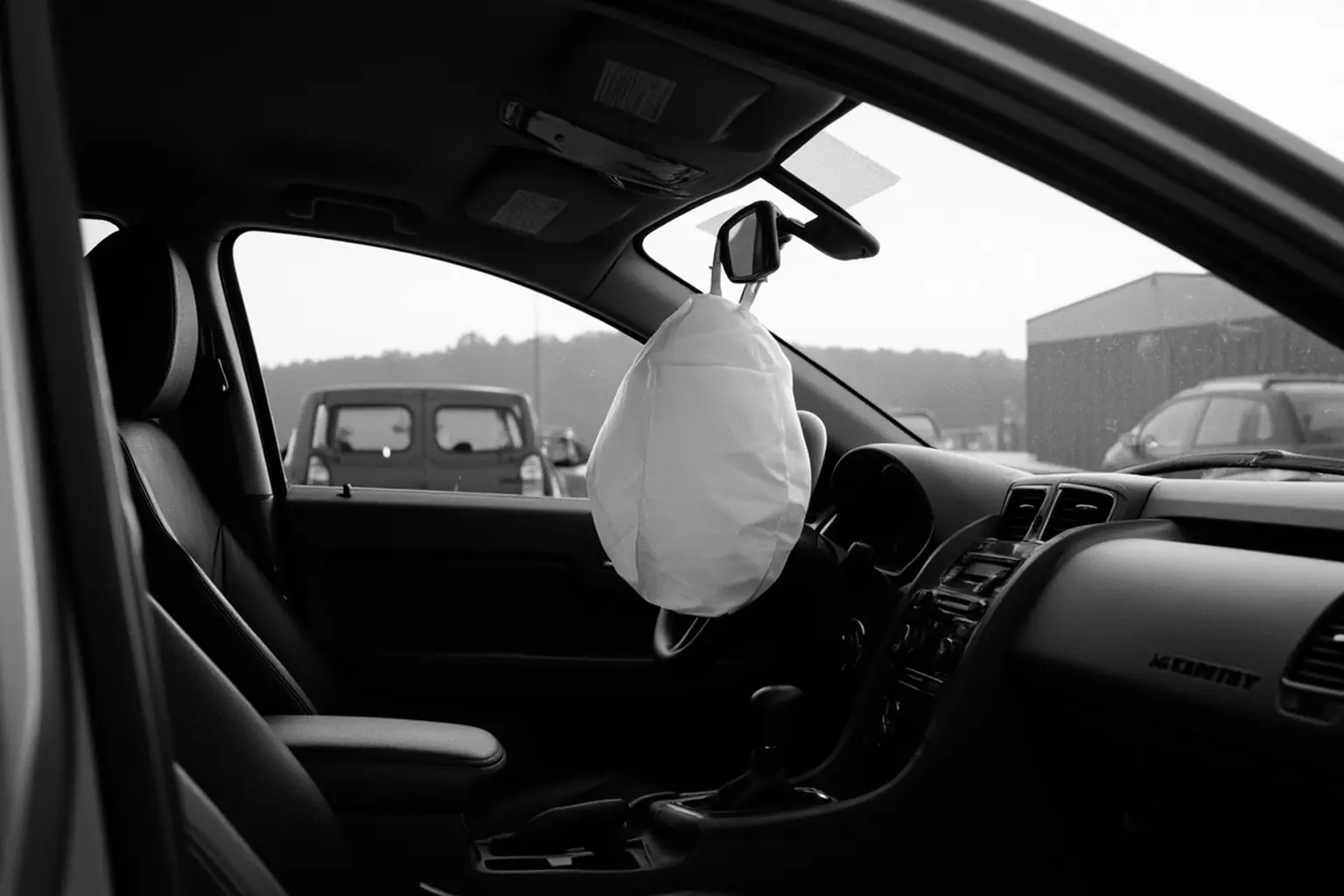
What counts as a car defect injury claim?
A car defect claim says a part was badly designed, badly made, or sold without a proper warning, and that it caused an injury or made one worse. The crash itself may be someone else's fault.
If another driver hit you and your seat belt then unlatched, you may have two claims: one against the driver for the crash, and one against the maker for the added harm. Lawyers call the second kind a crashworthiness or enhanced injury claim.
| Problem | What may have happened | Who to look at |
|---|---|---|
| Airbag did not open | Sensor, wiring or design fault, or the crash was below the trigger level | Carmaker, airbag or sensor maker |
| Airbag exploded or threw metal | A recalled inflator. NHTSA says Takata inflators may explode. | Inflator maker, carmaker, shop that skipped the recall |
| Seat belt unlatched or tore | Buckle, retractor or webbing failure | Carmaker, belt maker |
| Replaced airbag failed | Bad aftermarket part. NHTSA warns substandard inflators have caused deaths. | Repair shop, parts seller, importer |
| Brakes, steering, tires, fire | Part failure, software, or a fuel system problem | Carmaker, parts maker, tire maker, dealer |
My airbag did not deploy. Is that a defect?
Not always. This is the first thing a carmaker will argue. NHTSA says frontal and side airbags are generally designed to deploy in moderate to severe crashes and may deploy in even a minor crash. A low-speed bump may never reach the trigger level. A hard crash where the airbag stayed folded is a stronger sign that something went wrong.
An airbag can also hurt you when it does open. It fills in less than 1/20th of a second. NHTSA says serious or sometimes fatal injuries can occur if a person is too close to it. Facial burns, eye injuries or broken arms may be normal airbag injuries, or they may point to too much force. Only testing of the parts can tell the two apart.
What should I do first after a crash where a part failed?
- Get medical care and tell the doctor exactly how you were hurt, including what the belt or airbag did.
- Find where the car is today. Call the tow yard and your insurer the same day.
- Send your insurer and the tow yard a written message: do not repair, sell, crush or move this car. Keep a copy.
- Photograph the belt, buckle, airbags, dash warning lights, the interior and all four sides. Do not plug anything in or remove parts.
- Write down the VIN, then search it at NHTSA.gov/recalls and save a copy of the result.
- Keep the seat belt, clothing, car seat and any torn parts in a dry box.
- Get the police crash report and every repair record you have for the car.
- Ask a lawyer who handles auto product cases to arrange an inspection before anything else happens to the car.
How do I keep my car from being sold for salvage?
This is where most of these cases are lost. After a total loss, the insurer usually pays you, takes the title and sends the car to auction, often within days or weeks. Once a buyer has it, the belt, the sensors and the data may be gone.
Do not sign the title over until you have asked for a hold in writing. If you cannot pay for storage, ask a lawyer right away, because some will cover it while they review the case.
The car holds proof you cannot get anywhere else. Its event data recorder saves a short period, typically 30 seconds or less. Federal rules say it can capture whether belts were buckled and how far the driver was pressing the pedals. NHTSA says recorders may also store restraint usage and deployment status.
| Rule | Why it matters to you |
|---|---|
| The data belongs to the owner or lessee. | If the title moves to the insurer or a salvage buyer, you may lose the say over who reads it. |
| Others generally cannot pull it without consent or court authority. | Do not sign a broad consent. Ask what it covers first. |
| Reading it takes special equipment and access to the car. | No car means no download. A photo of the dash cannot replace it. |
Lost evidence can also hurt the other side. In Texas, a duty to keep evidence arises when a party knows or reasonably should know that there is a substantial chance a claim will be filed. A written hold request helps show the insurer or tow yard knew. We did not verify a matching Arizona rule, so ask a lawyer how Arizona courts treat lost evidence.
How do I check if my car has a recall or a known defect?
Your VIN search shows if that specific car needs a recall repair. Know its blind spots. It will not show a recall already repaired, and it will not show recalls more than 15 years old. So also search by year, make and model. That search gives general results for recalls, investigations, complaints and manufacturer communications. Save what you find, because other owners' complaints can show a pattern.
File your own complaint at NHTSA too, or call 888-327-4236. It goes into a public database with your personal details removed. Similar reports from a number of people can point to a defect. Keep it factual.
A recall helps, but you do not need one. Many defect claims involve parts that were never recalled. If there is a recall, the maker must fix the defect without charge, with a limit for vehicles first bought more than 15 years earlier. Taking the free repair does not end an injury claim. Have the part inspected before any recall repair touches it.
Who pays in a car defect case, and which insurance applies?
No state minimum applies to a carmaker the way it does to a driver. The money comes from the company or its product liability insurance. While the case runs, your own coverage carries the bills: health insurance, medical payments coverage if you bought it, and collision coverage for the car.
Your health plan may ask to be paid back from any recovery. If another driver caused the crash, that driver's auto policy is a separate source.
Sellers may be pulled in too. In Arizona, a seller includes a wholesaler, distributor, retailer or lessor. Texas protects a seller that did not make the product unless an exception applies. One exception is a seller that actually knew of the defect. That is why a dealer who sold a car with an open recall can matter.
How do carmakers fight these claims?
- The crash was too mild, or too violent, for the part to help.
- You were not wearing the belt. The recorder may answer this.
- The car was changed or poorly repaired after it was sold.
- The design met federal standards.
- The parts were lost or altered, so no one can test them.
What can a car defect claim cover, and how long does it take?
A claim can include medical bills, future care, lost pay, reduced ability to earn, pain and suffering and, in serious cases, punitive damages. Arizona's constitution bars statutory limits on the amount of injury damages. We cannot give you a typical amount, and no official source publishes one.
Expect these to run longer than a normal crash claim. They usually need engineers, part testing, and a lawsuit against a company with its own experts. No agency publishes an average timeline. Plan on a year or more, and longer when the design is disputed. Your filing deadline does not wait for any of that.
What is different in Arizona and Texas?
| Issue | Arizona | Texas |
|---|---|---|
| Deadline to sue | Product claims use the two-year period. That period is two years. | Two years. |
| Age of the product | The statute still has wording about claims accruing more than twelve years after first sale. An Arizona appeals court has described that kind of 12-year bar as found unconstitutional. Have a lawyer confirm how it applies. | Generally 15 years after the defendant sold it. |
| Design claims | A maker can defend by showing it met the state of the art. | You must prove a safer alternative design. |
| Federal standards | Not covered by the sections above | A maker that met mandatory federal standards gets a presumption you can try to rebut. |
| Maker and seller | The maker may have to cover a seller's judgment. | Sellers are protected unless an exception applies. |
| Shared fault | Your award is reduced by your share. Each defendant generally pays only its share. | No recovery if you are more than 50 percent responsible. |
| If a government vehicle or road was involved | File a notice of claim within 180 days and sue within one year. | Notice within six months. A city charter can set its own period. |
Mistakes that sink car defect claims
- Signing the title over before anyone inspects the car.
- Letting a shop repair the belt or airbag first.
- Letting someone download the recorder without knowing who will get the data.
- Settling with the other driver in a way that releases the carmaker.
Questions
Can I sue if my airbag did not deploy?
Possibly, if the crash was serious enough that it should have opened. NHTSA says airbags are generally designed for moderate to severe crashes. Testing the parts usually decides it.
Do I need a recall to sue a carmaker?
No. A recall can help, but many claims involve parts never recalled. If there is a recall, its remedies are in addition to other legal remedies.
Who owns the black box data in my car?
Federal law says the owner or, for a leased car, the lessee. A new owner may control it after a sale.
Airbag, seat belt or car defect? See if you are owed money.
A free case review. $0 upfront. No fee unless you win.
See if I’m owed moneySources (44)
- 49 CFR 563.11, checked 2026-11-09. “special equipment is required, and access to the vehicle or the EDR is needed”
- NHTSA, checked 2026-11-09. “you'll learn if a specific vehicle needs to be repaired as part of a recall”
- NHTSA, Motor Vehicle Safety Defects and Recalls, checked 2026-11-09. “the recall remedies are in addition to other available legal remedies”
- NHTSA, checked 2026-11-09. “A safety recall that has already been repaired.”
- Driver Privacy Act of 2015, checked 2026-11-09. “is the property of the owner, or, in the case of a leased vehicle, the lessee”
- Tex. Civ. Prac. & Rem. Code § 16.012, checked 2026-11-09. “a claimant must commence a products liability action against a manufacturer or seller of a product before the end of 15 years after the date of the sale of the product by the defendant”
- NHTSA, checked 2026-11-09. “subject to recall due to a safety defect that may cause them to explode and result in serious injury or death”
- NHTSA, checked 2026-11-09. “Substandard, dangerous air bag inflators manufactured in China have caused deaths and injuries in the United States.”
- NHTSA, checked 2026-11-09. “generally designed to deploy in moderate to severe crashes and may deploy in even a minor crash”
- NHTSA, checked 2026-11-09. “less than 1/20th of a second”
- NHTSA, checked 2026-11-09. “serious or sometimes fatal injuries can occur if the driver or passenger is too close”
- 49 CFR 563.11, checked 2026-11-09. “typically 30 seconds or less”
- 49 CFR 563.11, checked 2026-11-09. “Whether or not the driver and passenger safety belts were buckled/fastened”
- 49 CFR 563.11, checked 2026-11-09. “How far (if at all) the driver was depressing the accelerator and/or brake pedal”
- NHTSA, checked 2026-11-09. “restraint usage/deployment status”
- Driver Privacy Act of 2015, checked 2026-11-09. “may not be accessed by a person other than an owner or a lessee”
- Brookshire Bros. v. Aldridge (Tex. 2014), checked 2026-11-09. “a party knows or reasonably should know that there is a substantial chance that a claim will be filed”
- NHTSA, checked 2026-11-09. “Safety recalls that are more than 15 years old”
- NHTSA, checked 2026-11-09. “you'll get general results for recalls, investigations, complaints and manufacturer communications”
- NHTSA, Motor Vehicle Safety Defects and Recalls, checked 2026-11-09. “Call 888-327-4236”
- NHTSA, checked 2026-11-09. “Your complaint will be added to a public NHTSA database after personally identifying information is removed.”
- NHTSA, checked 2026-11-09. “If the agency receives similar reports from a number of people about the same product, this could indicate that a safety-related defect may exist”
- 49 U.S.C. § 30120, checked 2026-11-09. “shall remedy the defect or noncompliance without charge when the vehicle or equipment is presented for remedy”
- 49 U.S.C. § 30120, checked 2026-11-09. “was bought by the first purchaser more than 15 calendar years”
- A.R.S. § 12-681, checked 2026-11-09. “including a wholesaler, distributor, retailer or lessor”
- Tex. Civ. Prac. & Rem. Code § 82.003, checked 2026-11-09. “A seller that did not manufacture a product is not liable for harm caused to the claimant by that product unless the claimant proves”
- Tex. Civ. Prac. & Rem. Code § 82.003, checked 2026-11-09. “the seller actually knew of a defect to the product at the time the seller supplied the product”
- Ariz. Const. art. 18, § 6, checked 2026-11-09. “the amount recovered shall not be subject to any statutory limitation”
- A.R.S. § 12-551, checked 2026-11-09. “shall be commenced and prosecuted within the period prescribed in section 12-542”
- A.R.S. § 12-542, checked 2026-11-09. “within two years after the cause of action accrues”
- Tex. Civ. Prac. & Rem. Code § 16.003, checked 2026-11-09. “not later than two years after the day the cause of action accrues”
- A.R.S. § 12-551, checked 2026-11-09. “accrues more than twelve years after the product was first sold”
- Young v. DFW Corp. (Ariz. Ct. App. 1995), checked 2026-11-09. “the court found unconstitutional a statute of repose that barred product liability actions for injuries occurring more than 12 years after the product was first sold”
- A.R.S. § 12-683, checked 2026-11-09. “conformed with the state of the art at the time the product was first sold by the defendant”
- Tex. Civ. Prac. & Rem. Code § 82.005, checked 2026-11-09. “there was a safer alternative design”
- Tex. Civ. Prac. & Rem. Code § 82.008, checked 2026-11-09. “complied with mandatory safety standards or regulations adopted and promulgated by the federal government”
- A.R.S. § 12-684, checked 2026-11-09. “the manufacturer shall indemnify the seller for any judgment rendered against the seller”
- A.R.S. § 12-2505, checked 2026-11-09. “the claimant's action is not barred, but the full damages shall be reduced in proportion to the relative degree of the claimant's fault”
- A.R.S. § 12-2506, checked 2026-11-09. “the liability of each defendant for damages is several only and is not joint”
- Tex. Civ. Prac. & Rem. Code § 33.001, checked 2026-11-09. “a claimant may not recover damages if his percentage of responsibility is greater than 50 percent”
- A.R.S. § 12-821.01, checked 2026-11-09. “within one hundred eighty days after the cause of action accrues”
- A.R.S. § 12-821, checked 2026-11-09. “shall be brought within one year after the cause of action accrues and not afterward”
- Tex. Civ. Prac. & Rem. Code § 101.101, checked 2026-11-09. “not later than six months after the day that the incident giving rise to the claim occurred”
- Tex. Civ. Prac. & Rem. Code § 101.101, checked 2026-11-09. “A city's charter and ordinance provisions requiring notice within a charter period permitted by law are ratified and approved.”