Food poisoning from a restaurant or store: how to prove it and who pays
Ask a doctor about a stool test, because a lab result can name the germ that made you sick. Then report it to your local health department. Keep receipts and leftovers. Without a test, proving which meal caused it is hard, since the food that sickened you is usually not your last meal.
Last checked November 9, 2026 · Official sources (48)

How long after eating does food poisoning start?
CDC estimates 48 million people get sick from foodborne illness every year. Of those, 128,000 are hospitalized and 3,000 die. Most people blame the last thing they ate. CDC says that is usually wrong, and it often takes 2 to 3 days to start feeling sick. The timing below is why a claim needs more than a feeling about one meal.
| Germ | When symptoms usually start | Why it matters for a claim |
|---|---|---|
| Staph | 30 minutes to 8 hours | One of the few that can point to a recent meal |
| Norovirus | 12 to 48 hours | Often spreads person to person, so the other side blames that |
| Salmonella | 6 hours to 6 days | A wide window means several possible meals |
| Campylobacter | 2 to 5 days | Your last meal is rarely the cause |
| E. coli | 3 to 4 days, and about 5 to 10 percent develop HUS | The most serious claims often involve HUS |
| Listeria | Usually within 2 weeks | Hard to remember meals that far back, so records matter |
When should I go to the doctor for food poisoning?
This page is not medical advice. CDC says severe food poisoning can cause bloody diarrhea, diarrhea that lasts more than 3 days, fever over 102°F, frequent vomiting and dehydration. CDC also warns of hemolytic uremic syndrome, or HUS, a kidney problem linked to E. coli. For its signs, CDC says to call the doctor or go to the emergency room immediately.
CDC lists little or no urination, unusual bruising and extreme tiredness among them. If you are pregnant, call your doctor early. CDC warns that infections during pregnancy can lead to miscarriage or stillbirth. Some health problems last weeks or months after the illness itself is over.
What should I do if a restaurant made me sick?
- Get care. Tell the provider where and what you ate, and ask whether you should be tested for a foodborne germ.
- Write down everything you remember eating in the week before you got sick, plus places and events.
- Keep receipts, card statements, delivery app orders and loyalty or shopper card numbers.
- Freeze leftovers in a sealed bag marked "do not eat." Keep the original packaging or label.
- Report it to your local health department and answer if they call for an interview.
- Ask others who ate with you if they got sick, and save their names and numbers.
- Do not sign a release or accept a gift card from the restaurant until you know how sick you were.
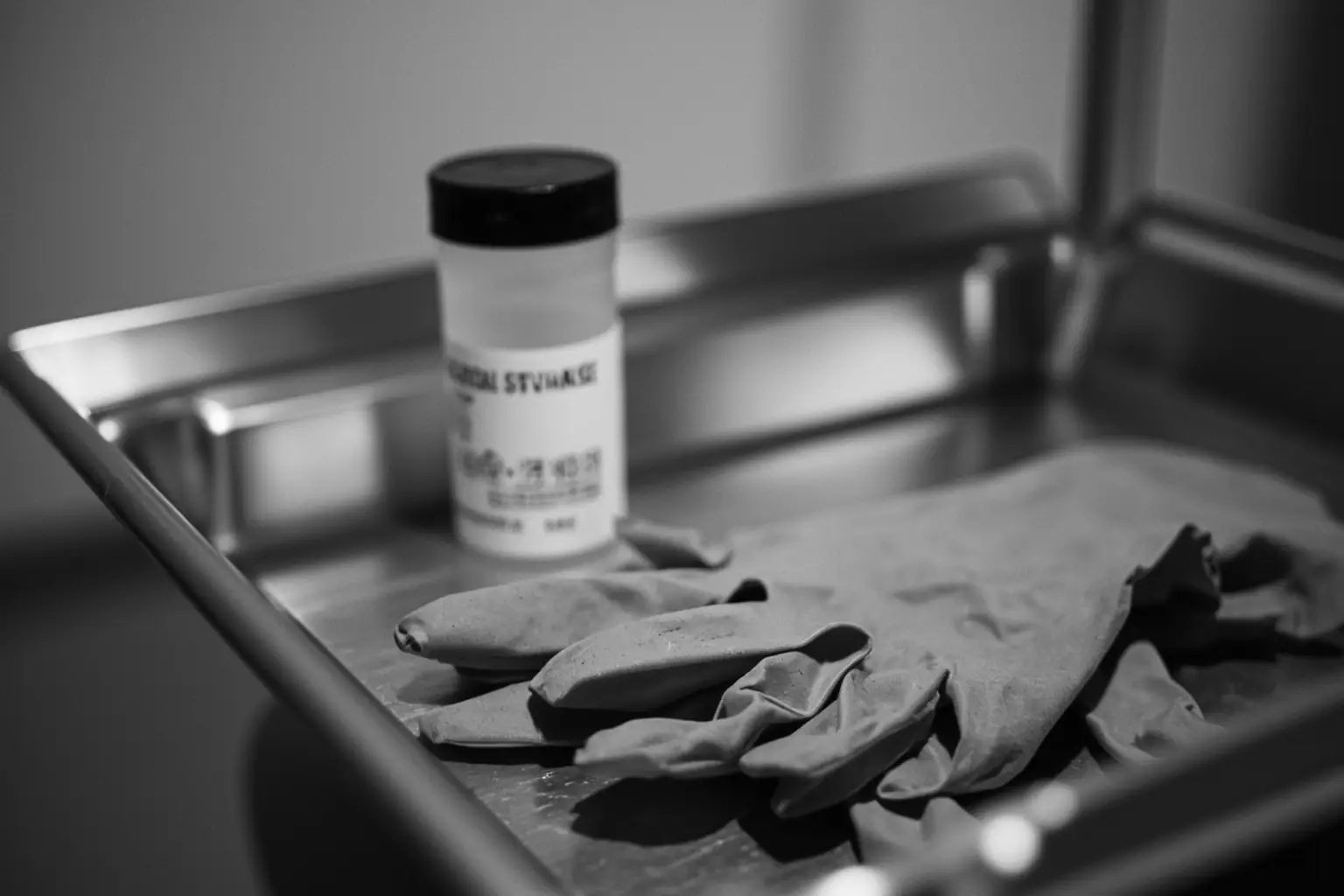
Why is a stool test so important to prove food poisoning?
It is the difference between "I got sick" and "I had this germ." A provider can take a sample of your stool or blood and test it. A lab takes 1 to 3 days to run tests. Without a sample taken while you are still sick, there may be nothing to test later.
Many providers now use rapid tests. A rapid test can name the germ, but CDC notes that some details can only be obtained if the positive sample is also cultured. That matters for a claim. Ask the clinic whether your sample will be cultured or sent on to a public lab. That extra step is what makes a DNA comparison possible.
Some results are sent, without your name, to PulseNet. PulseNet scientists look for groups of people sickened by bacteria with the same DNA fingerprint. A match between your sample and others who ate the same food is among the strongest proof that exists in these cases.
How do I report food poisoning, and what happens next?
Report it to your local or state health department. Do it promptly, since reports are how groups of similar illnesses get noticed. Officials may call and ask for copies of receipts, your shopper card number, or leftover food for testing. For a meat or poultry problem, you can also call the USDA hotline at 1-888-674-6854.
Be patient. CDC says the reporting lag for an outbreak is usually 3 to 4 weeks. You may recover before anyone connects your case to others.
If officials suspect a food, they do traceback. It starts by following the suspected food back through distribution, processing and production. It can stall when a sick person does not know the brand or production date. A positive food test alone cannot confirm the source; interviews have to show sick people ate it. Your receipts and notes help fill that gap, for the investigators and for your claim.
Can I sue a restaurant for food poisoning, and who pays?
Yes, you can bring a claim if you can show that a specific food made you sick and that someone is legally responsible for it. CDC says contamination can occur at any point along the food chain. So the restaurant may not be the only one involved.
| Who | Why they may be responsible | Who usually pays |
|---|---|---|
| Restaurant or caterer | Undercooking, sick workers, unsafe storage, cross-contamination | Its general liability insurer |
| Grocery store or food seller | Sold a contaminated or recalled item | Its liability insurer |
| Food maker or processor | Contaminated product | Its product liability insurer |
| Farm or distributor | Contamination before it reached the kitchen | Its insurer, if it has one |
| School, jail or government kitchen | Unsafe food served by a public body | The government, under short notice rules |
How do insurers fight food poisoning claims?
- You ate many other things that week, or had a stomach bug.
- No one else who ate there got sick.
- You have no lab result, so the germ is unknown.
- The germ's timing does not fit the meal you named.
- The health department found no violation. That is not the same as proof the food was safe.
- You were already sick or have a condition that explains it.
What can a food poisoning claim cover, and is it worth a lawyer?
A claim can include medical bills, lost pay, future care if there is lasting harm, and pain and suffering. No official source publishes an average amount, and we will not guess at one. A few rough days with no doctor visit is usually not worth a lawsuit.
A hospital stay, kidney damage from HUS, a pregnancy loss from Listeria, or a person who died is a very different matter. Those deserve a real review, and a lawyer can often tell you quickly if there is a case.
Timing varies. A single-restaurant claim with a lab result may settle in months. Claims tied to a large outbreak often wait on the public investigation, then take a year or more. Your deadline keeps running the whole time.
What is different in Arizona and Texas?
| Issue | Arizona | Texas |
|---|---|---|
| Where to report | Your county environmental health department. | The health department with jurisdiction, found through the state's map. Labs and providers must report notifiable conditions. |
| Deadline to sue | Two years. Product claims use that same period. | Two years. |
| Is food a product? | Yes. It covers food grown, prepared, served or sold. | Product claims reach anyone in the chain who is a producer or processor, among others. |
| Special food rule | Food otherwise fit to eat is not defective. A contaminated meal would likely be argued as not fit, but we did not find a court ruling to cite. | Oysters are on the list of known-risk products. That rule does not cover a manufacturing defect or express warranty claim. |
| Restaurants and sellers | Maker may have to cover a seller's judgment. | A seller that did not make the product is usually not liable unless an exception applies. Whether a restaurant counts as a maker can be disputed. |
| Shared fault | Your award is reduced by your share. | No recovery if you are more than 50 percent responsible. |
| School or other public kitchen | File a notice of claim within 180 days and sue within one year. | Notice within six months. |
Mistakes that hurt food poisoning claims
- Skipping the doctor and the test, then trying to prove it later.
- Throwing out the leftovers or packaging.
- Blaming the last meal before checking the timing.
- Not reporting it, so the illness never gets linked to others.
- Posting accusations online before you have a lab result.
- Accepting a refund and signing away a claim.
Questions
How do you prove food poisoning from a restaurant?
A lab result naming the germ, timing that fits, records of where you ate, and if possible a health department link. CDC says PulseNet can match germs by DNA fingerprint.
Is it worth suing for food poisoning?
Usually only when you needed real medical care or lost significant work. Hospital stays and lasting harm change the answer.
How do I report food poisoning?
Contact your local or state health department promptly. For meat or poultry, you can also call USDA at 1-888-674-6854.
How long does it take to find an outbreak?
CDC says the reporting lag is usually 3 to 4 weeks.
Food poisoning? See if you are owed money.
A free case review. $0 upfront. No fee unless you win.
See if I’m owed moneySources (48)
- CDC, checked 2026-11-09. “They can take a sample of your poop or blood and test it.”
- CDC, checked 2026-11-09. “Promptly reporting your illness helps your local or state health department identify foodborne outbreaks.”
- CDC, checked 2026-11-09. “The food that made you sick is usually not the last food you ate.”
- CDC, checked 2026-11-09. “Write down everything you remember eating in the week before you got sick.”
- Arizona Department of Health Services, checked 2026-11-09. “Please contact your local county environmental health department if you believe you became ill from eating a certain food.”
- CDC, checked 2026-11-09. “Severe food poisoning can cause bloody diarrhea, diarrhea that lasts more than 3 days, fever over 102°F, frequent vomiting, and dehydration.”
- CDC, checked 2026-11-09. “CDC estimates that 48 million people get sick from a foodborne illness every year.”
- CDC, checked 2026-11-09. “Of those, 128,000 are hospitalized and 3,000 die.”
- CDC, checked 2026-11-09. “It often takes 2 to 3 days to start feeling sick after eating a contaminated food.”
- CDC, checked 2026-11-09. “diarrhea 30 minutes to 8 hours”
- CDC, checked 2026-11-09. “body aches are also possible 12 to 48 hours”
- CDC, checked 2026-11-09. “Symptoms usually start 6 hours to 6 days after infection”
- CDC, checked 2026-11-09. “fever, stomach cramps 2 to 5 days”
- CDC, checked 2026-11-09. “Around 5–10% of people diagnosed with E. coli develop a life-threatening health problem called hemolytic uremic syndrome 3 to 4 days”
- CDC, checked 2026-11-09. “Symptoms of invasive illness usually start within 2 weeks after eating food contaminated with Listeria.”
- CDC, checked 2026-11-09. “Call the doctor or go to the emergency room immediately.”
- CDC, checked 2026-11-09. “Infections during pregnancy can lead to miscarriage, stillbirth, premature delivery, or life-threatening infection of the newborn.”
- CDC, checked 2026-11-09. “For some people, these health problems can last for weeks or months after recovering from a foodborne illness.”
- CDC, checked 2026-11-09. “Store or freeze food with the original packaging or label.”
- CDC, checked 2026-11-09. “the laboratory takes 1–3 days to run tests”
- CDC, checked 2026-11-09. “Many healthcare providers are now using rapid tests that give a result quickly”
- CDC, MMWR, checked 2026-11-09. “can only be obtained if a CIDT‐positive specimen is also cultured”
- CDC, checked 2026-11-09. “Some test results (without information that identifies you) are sent to PulseNet.”
- CDC, checked 2026-11-09. “PulseNet scientists look for groups of people sickened by bacteria with the same DNA fingerprint (strain).”
- CDC, checked 2026-11-09. “They may also ask for copies of receipts, your shopper card number, or leftover food for testing.”
- USDA FSIS, checked 2026-11-09. “Call the toll-free USDA Meat and Poultry Hotline at 1-888-MPHotline (1-888-674-6854)”
- CDC, checked 2026-11-09. “The reporting lag for a foodborne outbreak is usually 3–4 weeks.”
- CDC, checked 2026-11-09. “Traceback usually starts by following a suspected food consumed by a sick person back through the points of distribution, processing, and production”
- CDC, checked 2026-11-09. “a sick person might not have information on the specific brand or production date of a food they ate”
- CDC, checked 2026-11-09. “cannot by itself confirm that the food is the source of the outbreak”
- CDC, checked 2026-11-09. “Contamination can occur at any point along the chain”
- Texas DSHS, checked 2026-11-09. “please use the Texas Retail Food Establishments Jurisdiction Interactive Map to contact the appropriate health department”
- Texas DSHS, checked 2026-11-09. “Health care providers, hospitals, laboratories, schools, and others are required to report patients who are suspected of having a notifiable condition”
- A.R.S. § 12-542, checked 2026-11-09. “within two years after the cause of action accrues”
- A.R.S. § 12-551, checked 2026-11-09. “shall be commenced and prosecuted within the period prescribed in section 12-542”
- Tex. Civ. Prac. & Rem. Code § 16.003, checked 2026-11-09. “not later than two years after the day the cause of action accrues”
- A.R.S. § 12-681, checked 2026-11-09. “any product that is grown, prepared, provided, served or sold and that is primarily intended for human consumption and nourishment”
- Tex. Civ. Prac. & Rem. Code § 82.001, checked 2026-11-09. “a designer, formulator, constructor, rebuilder, fabricator, producer, compounder, processor, or assembler of any product”
- A.R.S. § 12-681, checked 2026-11-09. “does not include a food product that is otherwise fit for human consumption and nourishment”
- Tex. Civ. Prac. & Rem. Code § 82.004, checked 2026-11-09. “(B) an oyster.”
- Tex. Civ. Prac. & Rem. Code § 82.004, checked 2026-11-09. “does not include an action based on manufacturing defect or breach of an express warranty”
- A.R.S. § 12-684, checked 2026-11-09. “the manufacturer shall indemnify the seller for any judgment rendered against the seller”
- Tex. Civ. Prac. & Rem. Code § 82.003, checked 2026-11-09. “A seller that did not manufacture a product is not liable for harm caused to the claimant by that product unless the claimant proves”
- A.R.S. § 12-2505, checked 2026-11-09. “the claimant's action is not barred, but the full damages shall be reduced in proportion to the relative degree of the claimant's fault”
- Tex. Civ. Prac. & Rem. Code § 33.001, checked 2026-11-09. “a claimant may not recover damages if his percentage of responsibility is greater than 50 percent”
- A.R.S. § 12-821.01, checked 2026-11-09. “within one hundred eighty days after the cause of action accrues”
- A.R.S. § 12-821, checked 2026-11-09. “shall be brought within one year after the cause of action accrues and not afterward”
- Tex. Civ. Prac. & Rem. Code § 101.101, checked 2026-11-09. “not later than six months after the day that the incident giving rise to the claim occurred”